
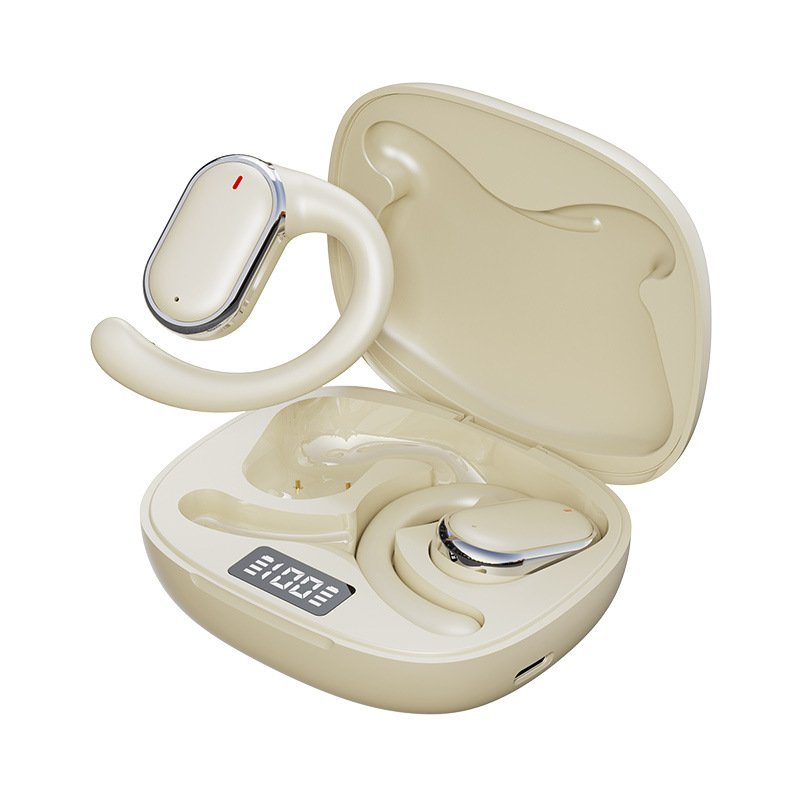
A complete guide to buying Bluetooth headsets: an in-depth analysis from demand to products
Abstract
In today’s digital age, Bluetooth headsets have become an indispensable electronic accessory in people’s lives. Whether it is daily commuting, sports and fitness, or work and study, Bluetooth headsets can bring us a convenient music experience and clear call quality. However, faced with a wide range of Bluetooth headset products on the market, consumers often feel at a loss. This article will provide you with a comprehensive and practical guide to buying Bluetooth headsets from multiple aspects, such as clarifying usage needs, understanding core parameters, mastering purchasing skills, referring to brands and reputation, and conducting actual experience, to help you choose the most suitable Bluetooth headset for yourself from many products.
- Introduction
Bluetooth headsets get rid of the constraints of cables, making it more free and convenient to use, and are loved by consumers. However, different people have different needs for Bluetooth headsets. Some people pay attention to sound quality and pursue high-quality music enjoyment; some people pay more attention to comfort and hope that they will not feel uncomfortable when wearing them for a long time; and some people have high requirements for noise reduction functions so that they can make clear calls or listen to music in noisy environments. Therefore, when purchasing Bluetooth headsets, we need to consider multiple factors comprehensively to find the most suitable product for ourselves.
- Clarify usage requirements
(I) Usage scenarios
- Commuting scenarios: For people who often commute by public transportation, noise reduction is essential. In noisy environments such as subways and buses, noise-cancelling headphones can effectively isolate external noise, allowing you to immerse yourself in your own music world or answer calls more clearly. For example, Apple’s AirPods Pro and Sony’s WH-1000XM5 both have excellent noise reduction performance, which can create a quiet private space for you.
- Sports scenarios: If you like to wear Bluetooth headphones when exercising, then the waterproof and sweat-proof performance, wearing stability and comfort of the headphones are key factors to consider. Huawei’s FreeClip adopts an open ear clip design with an IP54 waterproof rating. You don’t need to worry about damage when sweating or encountering light rain during exercise. It is also stable to wear and will not fall off during exercise, which is very suitable for sports enthusiasts.
- Office scenarios: In an office environment, you may need to wear Bluetooth headphones for a long time for calls or meetings. At this time, the call noise reduction function, wearing comfort and battery life of the headphones are particularly important. Bose’s QuietComfort has excellent call noise reduction capabilities, ensuring clear calls in a noisy office environment. At the same time, its ear pressure balance technology makes it comfortable to wear glasses, and the battery life can meet the needs of long-term office work.
(II) Personal preferences
- Sound quality preference: If you are a music enthusiast and have high requirements for sound quality, you need to pay attention to factors such as the audio decoding technology and dynamic unit size of the headphones. Headphones that support LDAC and AAC high-definition decoding can transmit higher-quality audio data and restore music details. For example, Sennheiser’s MOMENTUM 4 is equipped with a 42mm dynamic unit, with a mellow sound quality, suitable for classical music lovers and users with high requirements for sound quality.
- Appearance design: The appearance design of Bluetooth headphones is also the focus of many people. Different people have different preferences for the color, shape, material, etc. of headphones. Some people like simple and fashionable designs, while others prefer unique styles. For example, Apple’s AirPods series is loved by many consumers for its simple appearance and exquisite workmanship; while some niche brands of Bluetooth headsets may launch some creative and personalized appearance designs to meet the aesthetic needs of different consumers.
III. Understanding core parameters
(I) Parameters related to sound quality
- Audio decoding technology: Common Bluetooth audio decoding formats include SBC, AAC, aptX, LDAC, etc. Among them, SBC is the most basic decoding format with average sound quality; AAC is widely used on Apple devices, and the sound quality is improved compared to SBC; aptX can provide audio transmission close to CD quality; and LDAC can transmit audio signals with higher bit rates, retain more music details, and have better sound quality. If you are using an Android device and have high requirements for sound quality, it is recommended to choose Bluetooth headsets that support aptX or LDAC decoding.
- Dynamic unit size: Dynamic units are common sound units in Bluetooth headsets, and their size has a certain impact on sound quality. Generally speaking, the larger the size of the dynamic unit, the better the low-frequency performance and the wider the dynamic range of the sound. For example, Edifier’s ZeroAir uses a 13mm unit, which can bring a shocking bass effect. However, it should be noted that the size of the dynamic unit is not the larger the better, and the overall adjustment and design of the headset also need to be considered.
(II) Noise reduction related parameters
- Noise reduction method: The noise reduction method of Bluetooth headsets is mainly divided into passive noise reduction and active noise reduction. Passive noise reduction is to isolate external noise through the physical structure of the headset itself, such as the fit and material of the earplug. Active noise reduction is to pick up external noise in real time through the built-in microphone, and then use reverse sound waves to offset these noises. Active noise reduction can be divided into feedforward noise reduction, feedback noise reduction and hybrid noise reduction. Hybrid noise reduction combines the advantages of feedforward and feedback, and the noise reduction effect is usually better.
- Noise reduction depth: Noise reduction depth refers to the degree to which the headset can reduce external noise, usually expressed in decibels (dB). The greater the noise reduction depth, the more obvious the noise reduction effect of the headset. For example, the noise reduction depth of iKF Fly Max reaches -45dB, which can provide efficient noise reduction for different listening scenarios. However, it should be noted that the noise reduction depth is not the only criterion for measuring the noise reduction effect. The adaptive noise reduction ability of the headphones and the ability to handle noise of different frequencies are also important.
(III) Battery life related parameters
- Headphone battery life: The battery life of the headphones refers to the time that the headphones can be used continuously when fully charged. Generally speaking, the longer the battery life of the headphones, the more convenient they are to use. For example, Xiaomi’s Buds 6 has a total battery life of up to 42 hours, so there is no need to worry about power issues even on long trips. However, it should be noted that the battery life of the headphones will be affected by factors such as volume and usage functions.
- Charging box battery life: The charging box can provide additional charging times for the headphones, extending the overall use time of the headphones. When choosing Bluetooth headphones, in addition to paying attention to the battery life of the headphones themselves, you also need to consider the battery life of the charging box. The charging box of some high-end Bluetooth headphones can not only charge the headphones, but also support wireless charging, which is more convenient to use.
(IV) Connection-related parameters
- Bluetooth version: The Bluetooth version will affect the connection stability, transmission speed and power consumption of the headset. At present, most mainstream Bluetooth headsets on the market use Bluetooth 5.0 and above. Compared with previous versions, Bluetooth 5.0 has faster transmission speed, lower power consumption and longer transmission distance. For example, UGREEN S5 uses a 5.4 Bluetooth chip with lower latency and more stable connectivity.
- Connection stability: Connection stability is one of the important indicators for measuring the performance of Bluetooth headsets. A Bluetooth headset with a stable connection will not experience disconnection or freeze during use. There are many factors that affect connection stability, such as Bluetooth version, signal interference, and the distance between the headset and the device. When choosing a Bluetooth headset, you can understand the connection stability of the headset by checking user reviews and actual tests.
IV. Mastering purchasing skills
(I) Wearing comfort
- Headphone type: Bluetooth headsets are mainly divided into in-ear, semi-in-ear, open, and head-mounted types. Different types of headsets vary in wearing comfort. Generally speaking, open-ear headphones are more comfortable to wear, will not completely block the ear canal, and will not feel obvious pressure on the ears when worn for a long time, which is suitable for sports and daily use; semi-in-ear headphones are lighter to wear and suitable for daily commuting; in-ear headphones have better sound insulation, but improper wearing may cause discomfort in the ear canal; headphones usually have better sound quality and noise reduction effects, but they are larger in size and not very convenient to carry.
- Headphone weight: Headphone weight is also one of the important factors affecting wearing comfort. The lighter the headphones, the more comfortable they are to wear. Generally speaking, the weight of a single headphone is less than 5 grams, and the pressure on the ear will be relatively small when worn for a long time. For example, Lenovo’s bone conduction headphones are only 2.8 grams, and there is almost no pressure when worn for a long time.
- Earplug design: For in-ear headphones, the design and size of the earplugs have a great impact on wearing comfort. Choose headphones with earplugs of various sizes, and you can choose the most suitable earplugs according to the size of your personal ear canal to improve comfort. At the same time, the material of the earplug is also very important. Soft and skin-friendly materials can reduce irritation to the ear canal.
(II) Intelligent functions
- Active noise reduction: Active noise reduction has become a standard feature of mid-to-high-end Bluetooth headsets. Different brands and models of headsets have different active noise reduction technologies. Some headsets have adaptive noise reduction functions, which can automatically adjust the noise reduction intensity according to the environment, providing a more comfortable noise reduction experience. For example, Sony’s WH-1000XM5’s AI intelligent noise reduction can automatically identify the environment and adjust the noise reduction mode according to different scenarios.
- Touch operation: The touch operation function allows users to play/pause music, switch songs, adjust the volume, answer/hang up calls, etc. by touching the surface of the headset, which is more convenient to use. When choosing Bluetooth headsets, you can pay attention to whether the touch sensitivity and operation logic of the headset are in line with your usage habits.
- Spatial audio: Spatial audio technology can bring a more immersive audio experience, making users feel as if they are in a music or film and television scene. For example, Apple’s AirPods Pro’s spatial audio + head tracking technology can adjust the direction and position of the sound in real time according to the rotation of the user’s head, enhancing the stereoscopic and realistic sense of hearing.
(III) Waterproof and sweatproof performance
If you need to use Bluetooth headphones during exercise or in a humid environment, you need to pay attention to the waterproof and sweatproof performance of the headphones. Generally speaking, the waterproof level of headphones is expressed by IPX. The higher the IPX level, the better the waterproof performance. For example, headphones with an IPX4 level can prevent water splashing from all directions and are suitable for use during exercise; while headphones with an IPX5 level can prevent water sprayed from nozzles from all directions and have a better waterproof effect.