
Can smart projectors replace TVs?
Abstract
At a time when home entertainment equipment is constantly developing, smart projectors and TVs are the two mainstream choices, which has triggered people’s thinking about whether smart projectors can replace TVs. This article conducts a detailed comparative analysis of smart projectors and TVs from multiple dimensions, including display effects, ease of use, functional characteristics, cost and maintenance, and applicable scenarios. By exploring the advantages and disadvantages of the two, it aims to provide consumers with a comprehensive reference for choosing home entertainment equipment and help them make more appropriate decisions based on their own needs.
I. Introduction
With the rapid advancement of technology, the home entertainment equipment market has shown a diversified development trend. Smart projectors have gradually emerged with their advantages such as large-screen viewing experience and portability, while TVs, as the core equipment of traditional home entertainment, still have a large user base. Whether smart projectors can replace TVs has become a topic of concern for many consumers. In-depth analysis of the characteristics and differences between the two is of great significance for consumers to reasonably choose home entertainment equipment.
II. Display effect comparison
(I) Picture quality and resolution
TVs have significant advantages in picture quality and resolution. After years of development, the screen display technology of TVs has become very mature. The brightness and resolution of LCD TV screens are very high, basically reaching 4K, with clear pictures and realistic and delicate colors. For example, Sony 65X91K TV uses Sony’s self-developed X1 image processing chip, which can further optimize the picture effect, support 4K HDR automatic mapping and multiple HDR formats, making the picture more vivid and realistic. In contrast, although smart projectors have greatly improved in picture quality in recent years, there is still a certain gap compared with high-end TVs. Especially in brighter environments, the picture of the projector may not be bright enough, and the details are not as good as those of TVs. However, high-end smart projectors such as XGIMI H5 use advanced projection technology, which can present delicate and clear picture effects, support 4K ultra-clear decoding and HDR10+HLG dual decoding technology, and narrow the gap with TVs to a certain extent.
(II) Brightness and contrast
Brightness is one of the important factors affecting the display effect. TVs have higher picture brightness, and the viewing effect is very good regardless of the ambient light intensity. The brightness of smart projectors is relatively low. After turning on the lights, the picture clarity of most projectors is significantly reduced. Only the more expensive laser projectors can maintain good clarity. For example, Dangbei X3 is a projector product that uses a laser light source. It has a brightness of 3200 ANSI lumens and can present a clear picture even in the daytime, but such a high-brightness projector is relatively expensive. In terms of contrast, high contrast can bring richer color levels and deeper black performance, and TVs usually perform better in this regard.
(III) Color performance
TVs have advantages in color reproduction. Their color gamut is wider and can better restore the colors of nature. The color performance of smart projectors is affected by many factors such as light sources and lenses. Although some high-end projectors have also made great efforts in color adjustment, there is still a certain gap compared with TVs as a whole. However, for ordinary home users, the color performance of smart projectors can basically meet daily viewing needs.
III. Convenience of use comparison
(I) Installation and placement
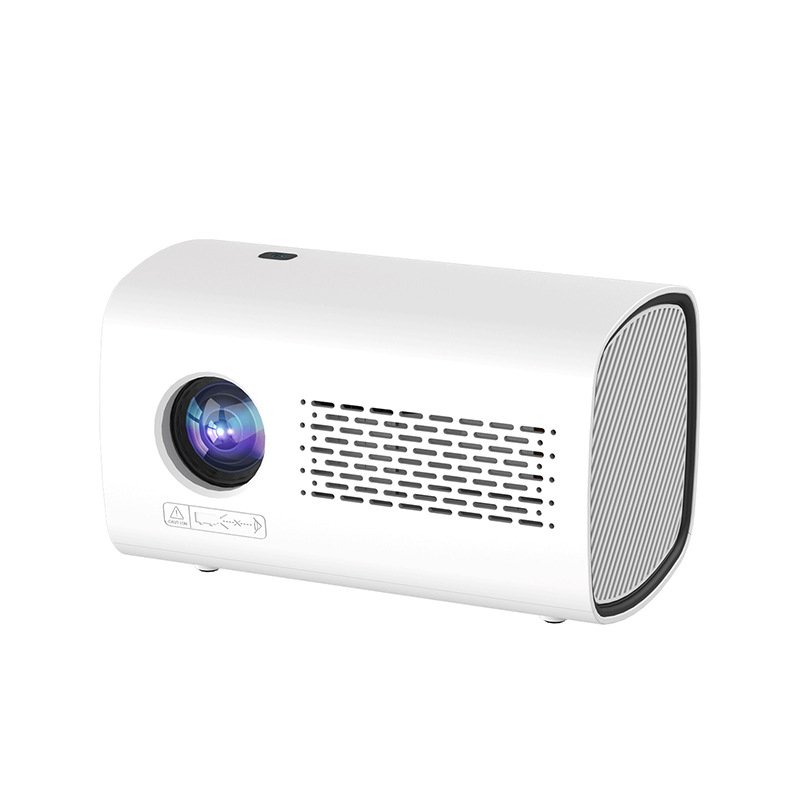
TVs need to be fixedly installed, the position is relatively fixed, and it is not easy to move. When installing, it is necessary to consider issues such as wall load-bearing and wiring. For some rooms that have been decorated, installing a TV may cause certain damage to the wall. In addition, there are certain requirements for the screen size and viewing distance of the TV, which may not be friendly to families with smaller spaces. Smart projectors have higher flexibility. They do not have high requirements for the screen, and the picture is clear even when projected on a white wall. With a pan-tilt bracket, the projector can also be projected onto the ceiling, which will not cause any damage to the wall and is very convenient to move. Modern projectors are usually small in size and light in weight, easy to carry and move, and can be easily handled whether it is a family gathering, outdoor camping or business presentation.
(II) Operation and Settings
TVs usually have a more intuitive and rich user interface, and the operation is relatively simple, even the elderly and children can easily get started. The operation of smart projectors is relatively complicated, especially after moving, the screen needs to be readjusted. However, high-end projectors have autofocus and automatic keystone correction functions, and no manual adjustment is required after moving, which greatly improves the convenience of use. In addition, smart projectors usually have built-in smart systems. After turning on, you can directly use the built-in system to watch TV programs and install other software. It is very convenient to use, but this also requires users to have certain operating skills.
IV. Comparison of functional features
(I) Smart functions
With the popularization and development of smart homes, more and more projectors and TVs are beginning to incorporate smart functions. Both support functions such as voice control, smart home interconnection, and online content playback, which can greatly enhance the user experience. For example, users can use voice commands to search for programs, adjust the volume, etc., to achieve more convenient operation. However, there may be some differences between TVs and smart projectors in terms of the richness and stability of smart functions. Some well-known brands of TVs may have more advantages in optimizing smart systems.
(II) Sound experience
TVs usually have built-in sound systems, but in order to obtain a better sound experience, many users will choose external sound equipment. Smart projectors usually require external audio equipment to obtain a better sound experience, but some high-end projectors are also equipped with high-quality audio systems, such as the XGIMI H5 equipped with Harman Kardon patented audio and DTS sound technology, and the JMGO J10S equipped with a Dynaudio tuning audio system, which can bring users an immersive viewing experience. However, from the overall sound performance, TV sets may have more advantages in the integration and optimization of sound effects.
(III) Content resources
TV sets have a wealth of program resources, including news, TV series, movies, variety shows, etc. By connecting to cable TV or Internet TV boxes, users can easily access a variety of content. Smart projectors can watch the content of online video platforms such as iQiyi and Tencent Video through the built-in intelligent system, and the content resources are also relatively rich. However, TV sets may be more secure in the stability and update speed of content resources, and some TV stations’ exclusive programs can only be watched on TV sets.
V. Comparison of costs and maintenance
(I) Purchase cost
In the same price range, the choices of TVs and smart projectors are different. Generally speaking, you can buy a good smart projector product for 3-4 thousand yuan, while large-screen TVs are generally expensive, with 100-inch ones costing tens of thousands or even hundreds of thousands. However, if you pursue the ultimate picture quality and sound experience, the price of high-end smart projectors is not low, and is not much different from that of high-end TVs. For example, some high-end smart projectors with laser light sources, high resolution and high-quality sound effects may cost more than 10,000 yuan.
(II) Cost of use
The bulb or light source of the smart projector needs to be replaced regularly, which increases the cost of use. For example, the bulb used in traditional projectors has a relatively short life and needs to be replaced regularly, while the laser light source has a longer life but is also more expensive. In contrast, TVs are relatively simple to maintain and have a longer service life, and generally do not require additional consumable replacement costs.
(III) Difficulty of maintenance
The structure of the TV is relatively simple and the maintenance difficulty is relatively low. If a fault occurs, it is relatively convenient to repair. Since the optical system of the smart projector is relatively complex, once a fault occurs, the difficulty and cost of repair may be high. In addition, the projector has certain requirements for the use environment, such as dust and humidity, which will affect its service life and performance.
VI. Comparison of applicable scenarios
(I) Home theater scenario
For users who pursue a large-screen viewing experience, smart projectors are an ideal choice for home theaters. It can easily project a screen of more than 100 inches, bringing stunning visual effects. With a high-quality sound system, users can enjoy a cinema-level viewing experience at home. For example, on a weekend night, a family sits together and watches a blockbuster movie with a smart projector. The immersive viewing experience is difficult to match with a TV. Although TVs can also provide a good viewing experience, they are subject to certain limitations in screen size, and it is difficult to achieve the same stunning effect as a projector.
(II) Daily entertainment scenarios
In terms of daily entertainment, TVs and smart projectors each have their own advantages. TVs are easy to operate and suitable for the whole family to watch news, TV series and other programs together, which helps to enhance family relationships and cultivate common topics. Smart projectors are more suitable for young people to carry out personalized entertainment activities, such as playing games and watching online videos. Its portability also allows users to use it in different rooms at any time to meet different entertainment needs.
(III) Special scenarios
The portability of smart projectors makes them very suitable for temporary home theaters, outdoor camping, or conference presentations. When camping outdoors, users can carry smart projectors and watch movies outside the tent, enjoying the perfect combination of nature and movies. In business presentations, smart projectors can be easily carried to different conference rooms for product displays and report presentations. However, due to their large size and fixed installation, the application of TVs in these special scenarios is subject to certain restrictions.
VII. Conclusion
Smart projectors and TVs each have their own advantages and disadvantages, and smart projectors cannot completely replace TVs. In terms of display effects, TVs have more advantages in picture quality, brightness, contrast and color performance, and can provide clearer and more realistic pictures; in terms of ease of use, TVs are simple to operate and fixed in installation, while smart projectors have higher flexibility and portability; in terms of functional characteristics, both have smart functions, but there are certain differences in sound experience and content resources; in terms of cost and maintenance, the purchase cost of smart projectors is relatively low, but the cost of use and maintenance are higher; in terms of applicable scenarios, smart projectors are more suitable for pursuing large-screen viewing experience and special scene applications, while TVs are more suitable for daily family entertainment and family viewing.
Consumers should make comprehensive considerations based on their own needs and budgets when choosing. If you pursue the ultimate picture quality and sound experience, and pay attention to the convenience of watching and operating with family members, then TVs may be a better choice; if you pursue the shocking effect of large-screen viewing, pay attention to portability and flexibility, and have a relatively limited budget, then smart projectors are a good choice. In the future, with the continuous advancement of technology, smart projectors and TVs will continue to develop and improve in their respective fields, bringing consumers better home entertainment