
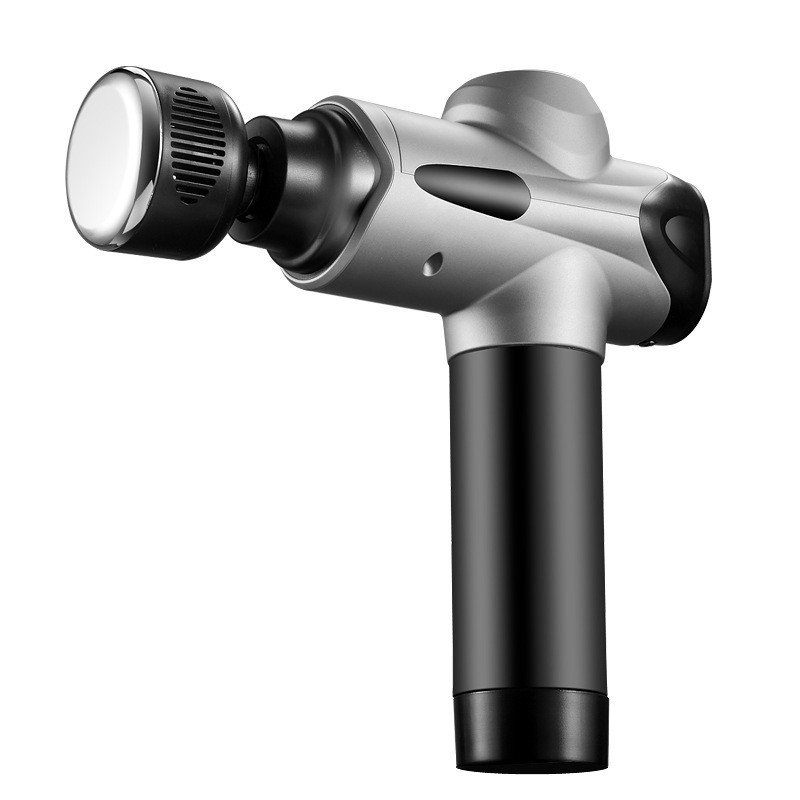
Scientific analysis and usage guide of using fascia gun massage to relieve pain
Abstract
In modern society, muscle pain is becoming more and more common due to changes in working methods and the accelerated pace of life. As an emerging massage and relaxation tool, fascia gun has attracted widespread attention because of its claimed pain relief effect. This article will explore in depth the scientific principles, scope of application, usage methods, precautions and comparison with other pain relief methods of fascia gun pain relief, aiming to provide readers with a comprehensive understanding of the role of fascia gun in pain relief and provide scientific basis and practical suggestions.
I. Introduction
With the change of people’s lifestyle, factors such as long-term desk work, lack of exercise and high-intensity physical labor have caused muscle pain to become a common problem that troubles many people. Traditional pain relief methods such as hot compress, massage, and drug treatment have certain effects, but they have many limitations. The emergence of fascia guns provides a new option for pain relief. However, there are still many questions about whether fascia guns can really relieve pain, as well as their mechanism of action and scope of application. Therefore, in-depth research on the relevant knowledge of fascia gun pain relief has important practical significance.
- Working principle of fascia gun
(I) Vibration therapy mechanism
The fascia gun works based on the principle of vibration therapy, and acts on muscles and fascia through high-speed vibration. Its internal motor generates high-frequency vibration, which transfers energy to the massage head, and the massage head then impacts the muscle tissue at a certain frequency and amplitude. This high-frequency vibration can penetrate the surface muscles, act on the deep fascia and muscle fibers, relax the deep muscle tissue through physical impact, help break down fascia adhesions, and improve muscle elasticity.
(II) Impact on blood circulation
The vibration stimulation of the fascia gun can dilate blood vessels and increase blood flow. When the fascia gun acts on the muscles, the high-frequency vibration waves cause the blood vessel walls to dilate, allowing more blood to flow to the muscle tissue. This helps to transport more oxygen and nutrients to muscle cells, while accelerating the discharge of metabolic waste (such as lactic acid). For example, after high-intensity exercise, the muscles will produce a large amount of lactic acid accumulation, leading to soreness. The fascia gun can effectively reduce the post-exercise inflammatory response and accelerate lactic acid metabolism by promoting blood circulation, thereby relieving muscle soreness.
(III) Regulation of the nervous system
The vibration of the fascia gun may also have a regulatory effect on the nervous system. High-frequency vibration stimulates muscle receptors and inhibits the conduction of pain signals through the nerve reflex mechanism. At the same time, it may activate inhibitory interneurons in the nervous system, reduce the release of excitatory neurotransmitters, thereby reducing the excitability of the nervous system and achieving the purpose of relieving pain.
III. Scope of application of fascia gun for pain relief
(I) Muscle soreness after exercise
For athletes and fitness enthusiasts, muscle soreness after exercise is a common problem. Scientific research shows that fascia guns have a significant effect on relieving muscle soreness after exercise, especially within 48 hours after high-intensity training. After high-intensity exercise, muscle fibers will have micro-damage, leading to inflammatory reactions and lactic acid accumulation, causing muscle soreness and stiffness. Using a fascia gun for massage can help relax muscles, promote blood circulation, and accelerate the muscle repair process. For example, after a long run, the leg muscles will feel extremely tired and sore. Using a fascia gun to massage the leg muscles can effectively alleviate this discomfort, shorten recovery time, and improve the ability to move after exercise.
(II) Chronic muscle strain pain
People who work in the same posture for a long time, such as office workers and drivers, are prone to chronic muscle strain pain. Long-term bad posture will keep the muscles in a state of tension, leading to muscle fiber fatigue and accumulation of metabolic products, which will cause pain. The fascia gun can massage these stiff parts, stimulate muscle tissue through high-frequency vibration, promote blood circulation, relieve muscle tension, and reduce the pain caused by chronic muscle strain. For example, people who work at a desk for a long time are prone to stiffness and pain in the shoulder and neck muscles. Regular massage with a fascia gun can effectively improve this condition.
(III) Myofascial pain syndrome
Myofascial pain syndrome is a common musculoskeletal pain disease characterized by the presence of trigger points (trigger points) in muscles and fascia, which can cause local pain and distant referred pain when pressed. The high-frequency vibration of the fascia gun can act on the deep muscle tissue and accurately act on these trigger points. Through mechanical vibration, it loosens muscle adhesions and nodules caused by overuse or long-term sitting, reduces local tissue tension, and relieves pain caused by myofasciitis or other muscle tension.
- How to use the fascia gun to relieve pain
(I) Choose the right massage head
The fascia gun is usually equipped with a variety of massage heads of different shapes and functions to meet the massage needs of different parts. The spherical head is suitable for large-area muscle relaxation, such as the back, buttocks and other parts. Its rounded shape can evenly act on a large area of muscle tissue, promote blood circulation, and relieve muscle tension. The flat head is suitable for massaging the muscles around the edges of bones or joints, and can better fit the curves of these parts and provide precise massage. The bullet head can accurately act on the deep muscle tissue, which is effective in relieving muscle nodules and deep muscle pain. For example, when massaging the calf muscles, you can use the spherical head for large-area relaxation, while for the pain points in the calf muscles, you can use the bullet head for precise massage.
(II) Adjust the appropriate strength
The choice of strength is crucial. When you first use the fascia gun, you should start with a low strength to allow the muscles to gradually adapt to this vibration stimulation. As the number of uses increases and the body adapts to the fascia gun, increase the strength appropriately according to your own feelings and muscle condition. If the force is too strong, it may damage the muscles and fascia, causing aggravated muscle pain or congestion; if the force is too weak, it will not relax the muscles and relieve pain. For example, when massaging sensitive areas such as the neck and shoulders, a lower force should be used to avoid excessive stimulation of the nerves and blood vessels.
(III) Find the right massage area
Before using the fascia gun, you need to accurately find the muscle area that needs to be massaged. Common massage areas include the neck, shoulders, back, arms, legs, etc. Avoid using it on joints, bone protrusions, and skin damage and inflammation. The joints are complex and fragile, and the vibration of the fascia gun may cause damage to the joints; the skin is thinner at bone protrusions, and the use of the fascia gun is prone to cause pain and damage; using the fascia gun on skin damage or inflammation may aggravate the inflammatory response and lead to infection and other problems. For example, when massaging the shoulder, the fascia gun should be applied to the muscle tissue of the shoulder instead of directly massaging the shoulder joint.
(IV) Control the massage time
The time for using the fascia gun each time should not be too long. It is generally recommended to massage each part for 3-5 minutes, and the total massage time for the whole body should not exceed 15-20 minutes. Excessive massage may cause muscle fatigue or injury. Massaging the same part for a long time will cause the muscles to be continuously stimulated by vibration, leading to muscle fiber fatigue and even muscle injury. For example, when massaging the thigh muscles, after massaging each part for 3-5 minutes, other parts should be changed for massage to avoid focusing on one part for a long time.
V. Precautions for fascia gun pain relief
(I) Applicable population restrictions
Although fascia guns are safe for most people, they need to be used with caution or avoided for some special groups. Pregnant women should avoid using fascia guns because the vibration of fascia guns may have adverse effects on the fetus. People with severe cardiovascular diseases, osteoporosis and other diseases should consult a doctor before using fascia guns. The physical conditions of these people are relatively special, and the vibration of fascia guns may aggravate their conditions or cause other health problems. For example, the bones of patients with osteoporosis are relatively fragile, and the vibration of the fascia gun may increase the risk of fractures.
(II) Avoid sensitive areas
In addition to the joints, bone protrusions, skin damage, and inflamed areas mentioned above, the fascia gun should also be avoided in areas with thin muscle walls and a large number of blood vessels or nerves such as the neck, chest and abdomen, and armpits. There are important blood vessels and nerves in the neck, such as the carotid artery, jugular vein, and vagus nerve. The vibration of the fascia gun may damage these structures and cause serious consequences. There are important organs in the chest and abdomen, and the use of the fascia gun may cause compression or damage to these organs. The armpit area is rich in nerves and blood vessels, and improper use may cause nerve damage or local congestion.
(III) Combined with other recovery measures
The fascia gun cannot replace comprehensive recovery measures. Maintaining a reasonable exercise schedule, adequate rest, and a healthy diet is the best recovery plan. Reasonable exercise arrangements can enhance muscle strength and flexibility and prevent muscle pain; adequate rest can give the body enough time to repair and recover; a healthy diet provides the body with necessary nutrients to support muscle repair and growth. For example, after high-intensity exercise, in addition to using a fascia gun for massage, you should also ensure adequate sleep and consume foods rich in protein, vitamins and minerals to promote the body’s recovery.
VI. Comparison of fascia guns with other pain relief methods
(I) Comparison with traditional massage
Traditional massage is usually performed by professional masseurs through techniques such as pushing, holding, kneading, and pinching to relax muscles and relieve pain. The advantage is that masseurs can perform personalized massages based on individual physical conditions and pain sites, and the techniques are more flexible and diverse. However, traditional massage requires appointment time and going to the massage venue, which is not convenient enough and the cost is relatively high. The fascia gun has the advantage of being highly portable, and users can use it anytime, anywhere, without being restricted by time and place. Moreover, the price of the fascia gun is relatively affordable, and it can be used for a long time after a one-time purchase. However, the massage effect of the fascia gun is relatively simple and cannot completely replace the personalized techniques of professional masseurs.
(II) Comparison with drug therapy
Drug therapy is one of the common methods of relieving pain, such as the use of non-steroidal anti-inflammatory drugs, analgesics, etc. The advantage of drug therapy is that it takes effect quickly and can relieve pain symptoms in a short time. However, drug therapy has certain side effects, such as gastrointestinal discomfort, liver and kidney damage, etc., and long-term use may also cause drug dependence. The fascia gun is a physical therapy method without the side effects and dependence problems caused by drugs. It relieves pain by promoting blood circulation, relaxing muscles and other mechanisms, and is a relatively safe and healthy way to relieve pain. However, for some severe pain symptoms, drug therapy may be a necessary auxiliary means.